Picture this: Two hotels, side by side. Same quality food. Same budget. Same talented chefs. But one consistently gets rave reviews and social media buzz, while the other gets… crickets.
What’s the difference?
Walk into their breakfast buffets, and you’ll see it immediately. One is a flat expanse of chafing dishes marching in a straight line across a table. The other? A dynamic, multi-level showcase where scrambled eggs sit at eye level, pastries tower on elegant risers, and the omelet station commands attention from its elevated platform.
Same food. Completely different experience.
After working with thousands of hospitality professionals—from boutique hotel operators to convention center directors—we’ve learned something critical: elevation isn’t just about aesthetics. It’s about space efficiency, guest flow, operational excellence, and yes, those Instagram moments that become free marketing.
If you’re a hotel banquet manager orchestrating a 500-person breakfast buffet, a caterer creating show-stopping dessert displays, or a university dining director maximizing limited serving space, your riser system is one of the most strategic equipment decisions you’ll make.
Let’s break down exactly how to choose the right one.
Why Risers? The Foundation of Great Buffet Design
Before we explore how to choose your ideal system, let’s talk about why risers matter:
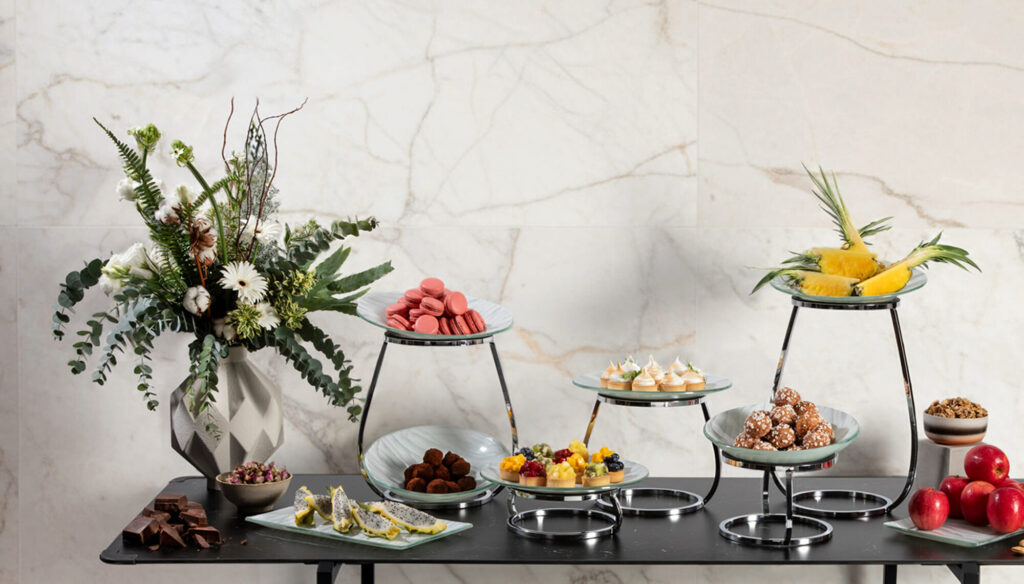
Visual Drama: Flat buffets are boring. Multi-level displays create depth, draw the eye, and make even simple offerings look abundant and luxurious.
Space Maximization: Limited table space? Go vertical. Risers allow you to display more food in less square footage—critical for smaller venues or packed events.
Guest Flow: Proper elevation creates clear sight lines, helping guests navigate the buffet quickly and reducing congestion.
Food Safety & Freshness: Elevating dishes improves air circulation and, when paired with proper warmers or coolers, maintains optimal serving temperatures.
The Five Pillars of Riser Selection
1. Elevation: How High Should You Go?
The height of your risers dramatically impacts both aesthetics and functionality.
Low Profile (2-4 inches)
Best for: Intimate settings, displaying flatware, bread baskets, and condiments
Guest experience: Easy reach for all ages and abilities
Visual impact: Subtle dimension, clean lines
Medium Height (6-10 inches)
Best for: Main dishes, salad bars, dessert displays
Guest experience: Comfortable serving height, clear visibility
Visual impact: Creates distinct levels without overwhelming
High Drama (12+ inches)
Best for: Signature items, centerpiece displays, back-of-buffet focal points
Guest experience: Eye-catching but may require serving assistance
Visual impact: Maximum wow factor, architectural presence
Pro Tip: Layer different heights in a single display. Start low in the front (easy access) and build higher toward the back (visual drama + better sightlines).
2. Storage: Hidden Functionality
Smart buffet design isn’t just about what guests see—it’s about what you can hide.
Open Frame Risers
Pros: Lightweight, modern aesthetic, affordable
Cons: No storage, all equipment visible
Best for: Clean, minimalist presentations
Enclosed Base Risers
Pros: Hide chafers fuel, backup supplies, electrical cords
Cons: Heavier, more investment
Best for: Professional events, hotels, high-end catering
Modular Storage Systems (like Rosseto’s Skycap)
Pros: Stackable, reconfigurable, space-efficient when not in use
Cons: Requires planning for assembly
Best for: Venues that host multiple event types
Storage Strategy: Calculate your total buffet needs, then choose risers that can conceal 30% extra capacity (backup utensils, replacement chafers, etc.).
3. Durability: Built to Last (or Not?)
Not all risers are created equal. Your choice depends on usage frequency and environment.
Commercial-Grade Steel
Expected lifespan: 10-15+ years
Best for: Hotels, universities, high-frequency venues
ROI calculation: Higher upfront cost ÷ thousands of events = pennies per use
Bamboo & Wood
Expected lifespan: 5-8 years with proper care
Best for: Organic themes, breakfast buffets, eco-conscious brands
Maintenance: Keep dry, avoid prolonged moisture exposure
Acrylic & Melamine
Expected lifespan: 3-7 years
Best for: Modern aesthetics, lighter-weight needs, budget-conscious operations
Considerations: Can scratch over time, avoid high-heat applications
The Durability Test: Ask yourself: “How many events per month? Indoor or outdoor? Staff handling or guest interaction?” Match material to real-world conditions.
4. Functionality: Beyond Just Looking Good
The best risers work as hard as they look good.
Load Capacity Think beyond the dish. Add the weight of:
The serving vessel (chafer, bowl, platter)
Food weight (a full hotel pan can weigh 30+ lbs)
Serving utensils
Guest interaction (accidental bumps, heavy-handed serving)
Rosseto’s commercial-grade risers support 50+ lbs per level—enough for even your heaviest applications.
Temperature Management
Hot Food: Look for risers with chafer integration or induction compatibility
Cold Food: Choose designs that accommodate ice pans or integrate with ice housing
Ambient: Standard risers work great for bread, pastries, fruit, salads
Adaptability Can your riser system work for:
Breakfast, lunch, AND dinner service?
Corporate events AND weddings?
Indoor ballrooms AND outdoor terraces?
Modular systems like Rosseto’s Skycap line offer maximum versatility—reconfigure for any occasion.
5. Different Ways to Use Buffet Risers
Here’s where things get interesting. While most people think “risers = buffet,” the smartest hospitality operators are using them in creative ways that have nothing to do with breakfast service.
Beverage Stations: Beyond the Coffee Urn
Think about your typical hotel coffee station: everything crammed onto one counter at the same height. Guests lean over, squinting to find the decaf. The oat milk is hidden behind the whole milk. It’s functional, but barely.
Now picture this: Coffee urns elevated at the back for easy visibility. Cup dispensers at medium height for comfortable reach. Condiments, stirrers, and sweeteners on low risers at the front. Sugar alternatives displayed on a small tiered riser so guests can see all options at a glance. The milk and cream in an ice-filled container at table level, easily accessible.
Same counter space. Same equipment. But the elevated version serves guests faster, looks more professional, and actually encourages people to try premium add-ons because they can see what’s available. This same approach works for juice bars (graduated carafes showing the rainbow of options), cocktail garnish stations (making those fancy herbs and fruit visible), and tea service displays (where the variety becomes part of the experience).
Breakfast Bars: The Make-or-Break Morning Moment
Hotel breakfast is where risers prove their ROI every single morning. A flat cereal dispenser lineup? Fine. But elevate those dispensers on a graduated system, and suddenly your grab-and-go breakfast looks like something guests want to photograph.
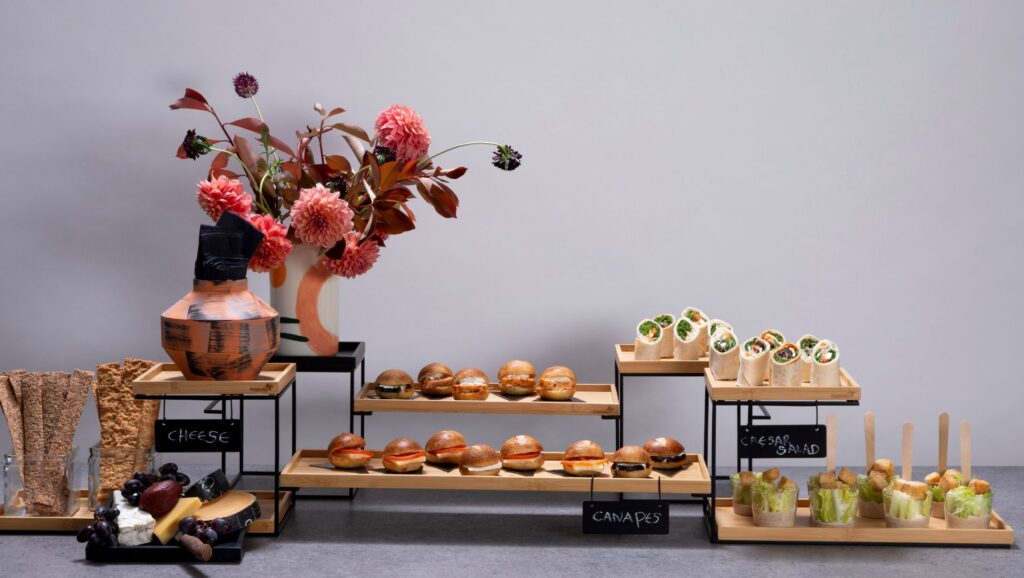
Pastry and bagel displays benefit even more. Stack those items in bakery cases at different heights, and you create the illusion of abundance even when you’re managing tight food costs. That Continental breakfast? Elevate the premium croissants and Danish pastries on the highest riser—they become aspirational. Standard bagels and toast on mid-level risers—still accessible. Butter and jam on low risers—functional and easy to reach.
The psychology is simple: height equals importance. Use it strategically.
For yogurt parfait stations (increasingly popular with health-conscious guests), elevated glass containers show off the layers while small risers for toppings create an interactive DIY experience that feels special even though your cost per serving is minimal.
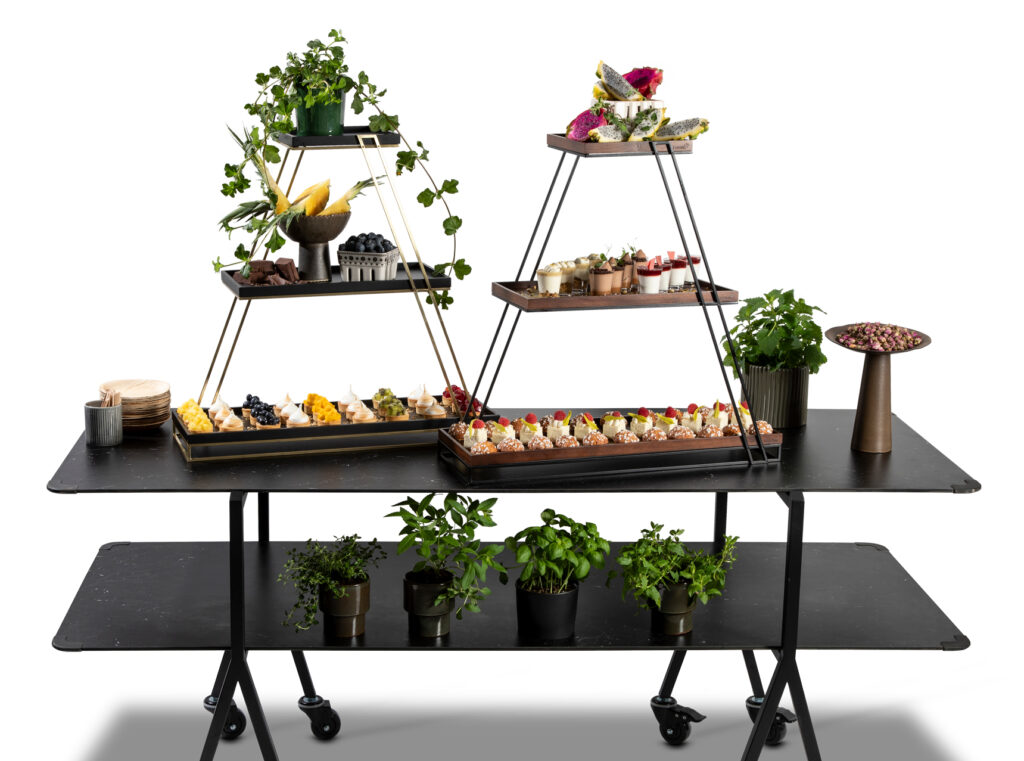
Dessert Drama: When the Grand Finale Needs Grandeur
Wedding receptions, galas, corporate celebrations—these are moments where dessert isn’t just food, it’s an event. And nothing says “event” like a properly elevated dessert display.
Wedding cake presentation is the obvious application. But smart caterers are going further. Create a dessert landscape where the wedding cake sits on the highest platform, surrounded by descending levels of complementary desserts—cupcakes at mid-height, chocolate truffles and petit fours on lower risers, with fresh flowers and candles filling the negative space between levels.
Cupcake towers have become almost cliché, but elevate them properly, and they still command attention. The key is varying not just height but also grouping—clusters of three or five risers create more visual interest than a simple pyramid.
Candy buffets (perfect for corporate events and milestone birthdays) rely entirely on elevation to create their signature look. Without risers, you just have bowls of candy. With strategic elevation, you create an interactive installation that guests gravitate toward. Use height to showcase premium candies (the fancy European chocolates) while keeping grab-and-go options (M&Ms, gummy bears) easily accessible on lower levels.
Action Stations: Where Theater Meets Function
Here’s where risers move from “nice to have” to “absolutely essential.” Action stations—where chefs prepare food in front of guests—are all about visibility and engagement.
Elevated induction cooktops allow standing guests to watch the chef work without crowding around a low counter. This isn’t just theater; it’s safety and efficiency. The chef has a proper working height, guests can see without leaning over hot equipment, and the whole setup creates natural crowd control because people can see from farther away.
Chef demo stations at food shows, hotel lobbies, or corporate events benefit from the same principle. Elevate the prep surface slightly and suddenly, fifty people can watch instead of ten. The chef becomes the show, not a hunched figure guests have to crane to see.
DIY stations—taco bars, pasta bars, build-your-own-salad stations—need elevation to work properly. The proteins and main ingredients go on the highest risers (clear visibility, creates the “main event” feeling). Toppings and mix-ins on mid-level risers (easy to reach). Sauces and dressings on the lowest risers (prevents drips, keeps the line moving). This isn’t just pretty; it’s operational design that makes service faster and reduces the bottlenecks that kill the guest experience.
6. Modularity: The System Advantage
What is Modularity?
Think of modularity like LEGO blocks for your buffet. It’s the freedom to mix and match different Rosseto systems to create the exact presentation your event demands. Want to create dynamic, multi-level displays? Combine Skycap risers (perfect for elegant desserts and drinks) with Alto risers (different heights, shapes, and colors) to build depth and visual interest. Planning a dessert display with both modern and rustic elements? Pair sleek black surfaces with warm wood-toned Alto risers in the same setup.
This is the Rosseto effect: different product lines working together to create diverse, eye-catching configurations. Each system is designed for specific purposes, but they’re built to complement each other—giving you the flexibility to design buffets that are uniquely yours.
Tomorrow’s wedding needs a different configuration than today’s corporate breakfast? Reconfigure the same pieces into an entirely new layout. Starting with a limited budget but planning to grow? Buy your core pieces now and expand your collection as your business grows. Want to mix materials—bamboo with steel, acrylic with wood—to create a signature look? Modular systems let you blend materials within one cohesive aesthetic.
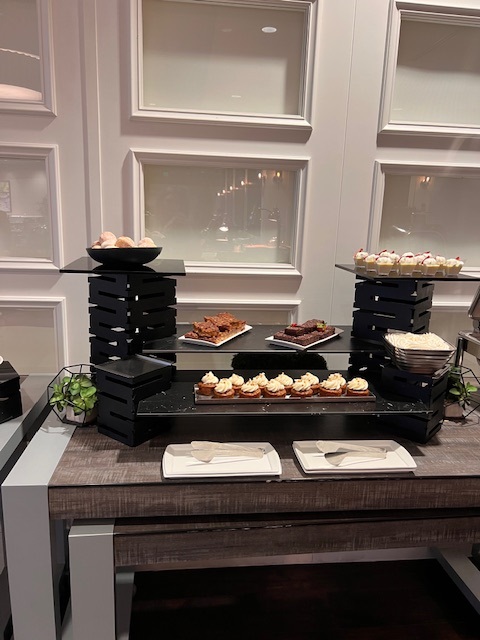
The Rosseto Skycap System: The Gold Standard
Multiple surface materials (bamboo, melamine, acrylic, glass)
Skyap risers come in 8″, 12″,18″, and 30″.
Commercial-grade steel frames
Interchangeable components across product lines
Why Modularity Matters:
Financial: Buy what you need now, expand later
Versatility: One system serves multiple event types
Storage: Stackable components save 60% warehouse space
Sustainability: Replace caps without replacing entire units
What makes a system truly modular?
Mix and Match Systems: Combine different Rosseto product lines in one display. Use Skycap’s elegant glass and steel construction for delicate items like cocktails and petit fours, then add Alto risers alongside for contrasting heights and textures. Play with different shapes—rectangular, square, narrow—to create visual rhythm.
Color and Material Flexibility: Create cohesive looks by matching colors across systems, or make bold statements by intentionally contrasting finishes. Black matte Skycap with black marble Alto risers for dramatic uniformity, or mix wood tones with metallics for organic modern appeal.
Multiple Occasions: The same risers showcasing breakfast pastries this morning transform into an upscale cocktail display tonight. Skycap’s versatility means one investment serves countless event types—from casual continental breakfast to black-tie galas.
Easy Assembly: Components connect and arrange quickly, making setup and breakdown simple. Reconfigure your buffet layout between services without complicated instructions or tools.
Flexible Layouts: Change your buffet configuration for different events using the same collection. Monday’s symmetrical breakfast display becomes Friday’s asymmetrical cocktail station by simply rearranging the pieces you already own.
Strategic Heights: Each riser has its designed height (Skycap comes in 8″, 12″, 18″, and 30″). Select and combine different heights across product lines to create the exact elevation strategy your presentation needs—low risers in front for accessibility, taller pieces in back for drama.
Making Your Decision: A Framework
Use this decision matrix to narrow your options:
Budget-Conscious Choice
Recommendation: Start with versatile square and rectangular risers in medium heights (6-10″). Choose durable materials and build a collection over time.
Maximum Versatility
Recommendation: Invest in a modular system like Skycap. Purchase core pieces in neutral finishes, add specialty items (hexagons, tall risers, colored caps) as signature pieces.
High-End Presentation
Recommendation: Combine commercial-grade steel risers with premium materials (handblown glass from Rosseto’s Kalderon Collection, rich bamboo, and elegant black matte). Focus on distinctive shapes and finishes.
Space-Limited Venue
Recommendation: Prioritize stackable, modular options. Choose risers with storage capacity. Focus on vertical elevation to maximize limited square footage.
Rosseto’s Riser Collections: Your Kingdom Awaits
Skycap Multi-Level System: The flagship. Modular, commercial-grade, endless configurations. Perfect for hotels, universities, and convention centers.
Bamboo Collection: Natural elegance. Health-conscious appeal. Ideal for breakfast buffets, organic-themed events, and eco-conscious brands.
Black Matte Collection Bold, dramatic, unforgettable. Perfect for evening events, modern aesthetics, and making a statement.
Hexagon Risers Geometric interest. Unique configurations. Ideal for contemporary spaces, creating focal points.
Implementation Tips: Setting Up for Success
Planning Your Layout
Map your buffet table dimensions
Determine traffic flow (single-sided vs double-sided access)
Plan height progression (low to high, front to back)
Allow 24″ per chafing dish, 12-18″ per display piece
Styling Your Risers
Layer textures: Mix materials (bamboo + steel, acrylic + wood)
Create odd-numbered groupings: 3 or 5 risers in a cluster (more visually interesting than even numbers)
Use negative space: Don’t fill every inch—breathing room creates elegance
Add accents: Greenery, candles, brand elements between risers
Maintenance & Care
Wipe down after each use
Check connection points regularly
Store properly (stacked systems save space and prevent damage)
Our bamboo has a clear protective finish it ideal for minimal care
The ROI of Quality Risers
Let’s talk numbers. A high-quality riser system might cost more upfront, but consider:
Guest Satisfaction: Better presentation = better reviews = more bookings
Operational Efficiency: Proper elevation = better flow = less staff needed
Food Cost Management: Attractive displays make smaller portions look abundant
Equipment Longevity: Buy once, use for a decade vs. replace cheap risers every 2 years
Brand Differentiation: Stand out from competitors with distinctive presentations
Planning Your Buffet Overhaul? Here Are Your Next Steps
Ready to elevate your buffet game? Here’s your action plan:
Audit Current Setup: What do you have? What’s missing? What needs replacing?
Identify Needs: What events do you host? What are your pain points?
Explore Options: Browse Rosseto’s full risers catalog
Start Strategically: Choose core pieces that serve multiple purposes
Build Over Time: Expand your collection as budget allows
In the kingdom of buffet presentation, risers are your crown jewels. They’re the difference between a forgettable food service experience and a memorable culinary showcase that guests photograph and rave about.
Rosseto’s riser systems offer commercial-grade durability, modular versatility, and stunning aesthetics—allowing you to create functional and beautiful buffets. As the King of Risers, every buffet is your kingdom